The Master’s Program in Arabic Language is an academic program designed to develop scholarly competence, research capabilities, and professional expertise in the field of Arabic language comprehensively. This program facilitates in-depth studies in Arabic linguistics, Arabic literature, and Arabic language teaching through an interdisciplinary approach that integrates Islamic values and the pesantren tradition.
Through a well-structured curriculum, the program emphasizes analytical skills, scientific research abilities, and critical thinking in understanding both classical and contemporary Arabic. In addition, students are equipped with the ability to apply modern linguistic approaches and innovative teaching methods across various academic and professional contexts.
This Master’s program is oriented toward producing graduates who excel in Arabic studies, possess strong Islamic character, have a global perspective, and are capable of contributing to the advancement of knowledge, education, and Islamic civilization through the integration of Arabic scholarship and Islamic values within a pesantren-based educational framework.
The spirit of academic development in the Master’s Program in Arabic Language is realized through the implementation of the Tri Dharma of Higher Education, which includes research-based academic education, research in Arabic linguistics, Arabic literature, and Arabic language teaching, as well as community service through the development of Arabic language education and literacy in an integrative manner. All academic activities are directed toward strengthening Arabic studies based on scientific and contextual approaches, with an orientation toward the Islamization of contemporary knowledge. Thus, the educational process emphasizes not only theoretical aspects but also the mastery of analytical skills, research competencies, and the application of linguistic methodologies in various contexts.
The distinctiveness of this program lies in the comprehensive mastery of Arabic language competencies, including linguistic analysis, the study of classical and modern texts, the development of Arabic teaching methodologies, and the utilization of technology in language learning. Students are equipped with the ability to optimize Arabic learning and usage through innovative approaches, quality enhancement in teaching, and the application of effectiveness and sustainability principles in language education systems.
This approach also encourages the integration of digital technology, the development of technology-based learning media, and the utilization of educational information systems to enhance the effectiveness and global competitiveness of graduates.
Through this approach, students of the Master’s Program in Arabic Language are expected to be capable of designing, developing, and implementing adaptive, innovative, and sustainable Arabic language education and research systems, while contributing to the advancement of knowledge, education, and Islamic civilization, grounded in Islamic values.
Students of the Master’s Program in Arabic Language have the opportunity to develop multidisciplinary competencies in the field of Arabic studies as the primary focus of strengthening academic knowledge and professional skills. Throughout the program, students are equipped with in-depth studies in areas such as Arabic linguistics, Arabic literature, and Arabic language teaching, supported by research activities, textual analysis, and critical studies of both classical and contemporary works.
In addition, students participate in academic activities such as scientific seminars, scholarly discussions, Arabic language teaching practice, and the use of technology in language learning. These activities aim to enhance linguistic analysis skills, textual comprehension, research capabilities, and professionalism in the field of Arabic language education and development.
This learning approach is systematically designed from the perspective of linguistic and educational sciences, enabling students to comprehensively understand the study of Arabic language, from structural analysis and textual interpretation to the development of teaching methodologies and evaluation of learning outcomes. Students are also encouraged to apply principles of evidence-based research, effective learning strategies, and quality assurance in the development of adaptive, ethical, and sustainable Arabic language education.
Through this approach, graduates are expected to possess strong competencies in advancing Arabic studies and to contribute to the improvement of educational quality, the development of Arabic literacy, and the strengthening of the role of the Arabic language in Islamic civilization in a sustainable manner.
In addition to core academic activities, students of the Master’s Program in Arabic Language have opportunities to develop their competencies through various academic and non-academic activities that are applicative and based on the advancement of Arabic studies. These activities include involvement in faculty research in Arabic linguistics, Arabic literature, and Arabic language education, community service programs through Arabic teaching and literacy development, participation in academic and student organizations, as well as the development of innovative projects in language learning and educational technology aimed at improving the effectiveness and quality of Arabic language education.
Students also gain practical experience through field activities such as teaching Arabic in educational institutions, developing learning media, assisting communities in language learning, and applying innovative and contextual teaching methods. This approach enables students to directly understand the implementation of Arabic language education in real contexts, while also enhancing problem-solving skills based on linguistic and educational cases.
The pesantren-based educational environment also plays a significant role in shaping graduates with strong moral integrity, discipline, academic ethics, and leadership. Therefore, graduates are expected to act as agents of change in the development of professional, innovative, sustainable, and Islamic value-based Arabic language education and scholarship.
As part of a globally oriented institution, the Master’s Program in Arabic Language encourages students to develop international perspectives through various collaborative academic activities, such as research partnerships in Arabic linguistics, Arabic literature, and Arabic language education, scholarly exchanges, and participation in national and international academic forums. The focus of study is directed toward strategic issues such as the global development of the Arabic language, contemporary linguistic dynamics, innovation in language learning, digitalization of language education, and the role of Arabic in civilization and international communication.
This approach aligns with the program’s vision of producing graduates who possess global competitiveness, adaptability to developments in linguistic studies and educational technology, and the ability to address challenges in language learning in the digital era. Graduates are expected to contribute to the advancement of Arabic studies and language education systems in a sustainable manner through scientific, innovative, and system-based approaches, while upholding Islamic values and the pesantren tradition as the foundation of ethics and professionalism.
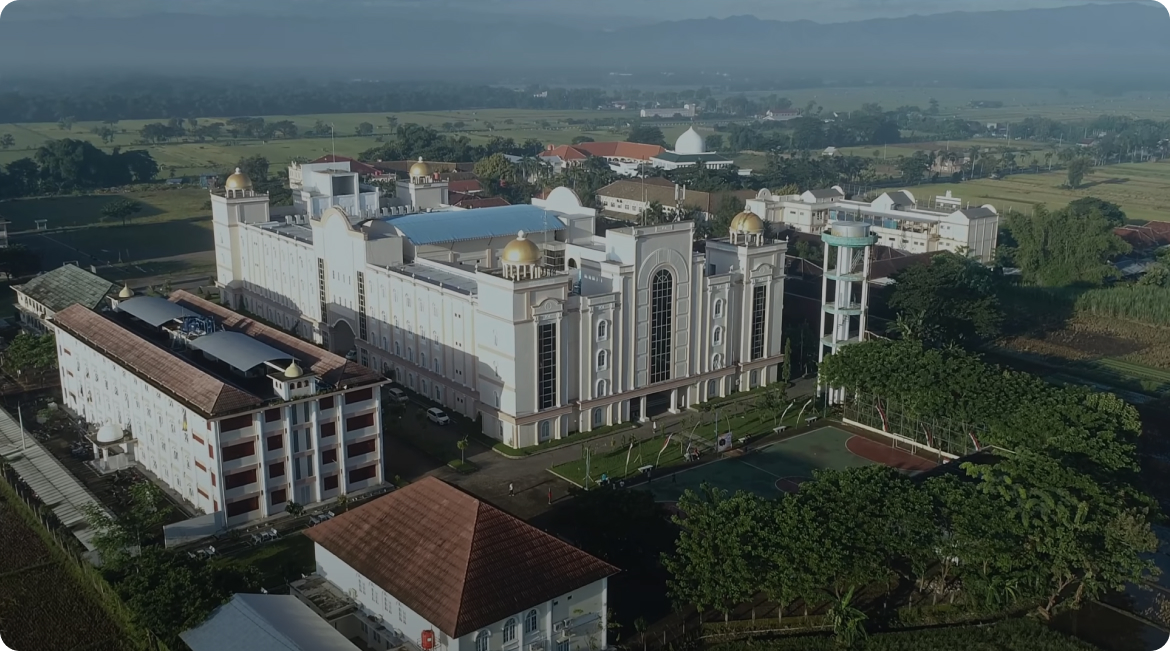
The Master’s Program in Arabic Language is supported by various learning facilities designed to strengthen students’ academic and professional competencies in the field of Arabic studies. These facilities include language laboratories, centers for Arabic linguistic and literary studies, libraries with classical and contemporary collections, multimedia learning spaces, and digital learning platforms used for linguistic analysis, research, teaching methodology development, and innovation in Arabic language education.
The availability of these facilities enables students to conduct data-driven linguistic studies, textual analysis, testing of linguistic theories, simulation of language learning, as well as the design and evaluation of teaching methods within language education systems. Through technology-based learning and academic practice, students can enhance their analytical skills, research capabilities, and critical, systematic academic decision-making.
With adequate facilities, students are expected to develop professionalism in Arabic language studies, including teaching, research, and scholarly development, thereby contributing to the creation of effective, innovative, and sustainable Arabic language education systems.
Through the integration of Arabic language-based education, the strengthening of Islamic values, and the development of applicable academic and professional competencies, the Master’s Program in Arabic Language is oriented toward producing graduates with the profile of an Islamic Arabic Language Scholar—individuals who possess expertise in linguistic analysis, comprehension of classical and contemporary texts, and the development of Arabic language education grounded in Islamic values.
In addition, the program aims to cultivate the profile of an Islamic Arabic Education Innovator and Academic Leader, referring to graduates who demonstrate leadership and innovation in the development of Arabic language education. They are expected to initiate improvements in educational systems, innovate teaching methodologies, and optimize the use of educational technology through effective and efficient educational management approaches, while adhering to Islamic principles.
With a system-based educational approach that integrates Arabic language studies, educational technology, Islamic values, and the pesantren tradition, the Master’s Program in Arabic Language is committed to producing graduates who are professional scholars and practitioners of Arabic, possessing competencies in linguistic analysis, text comprehension and interpretation, as well as the management of Arabic language education systems comprehensively.
Graduates are expected to innovate in designing and optimizing sustainable Arabic language learning systems, emphasizing effective learning processes, quality improvement in education, and the utilization of technology in language learning development. Furthermore, graduates are expected to contribute meaningfully to society and the Muslim community by enhancing Arabic literacy, developing learner-centered education, and implementing adaptive and competitive educational technologies, while remaining grounded in Islamic values.
Graduates of the Master’s Program in Arabic Language have broad career opportunities across various fields, including education, research, and the development of Arabic language scholarship and professional practice. They may pursue careers as Arabic language educators at different levels of formal and non-formal education, such as schools, pesantren, universities, and language training institutions, with key roles in teaching, curriculum development, and improving the quality of Arabic language learning.
In addition, graduates can advance in academic and research fields as lecturers, researchers, and scholars contributing to the development of Arabic linguistics, literary studies, and innovations in language teaching methodologies. Professionally, graduates also have opportunities to work as translators, editors, writers, and Arabic language consultants in national and international institutions.
Their competencies also enable them to take on roles in educational management as administrators of educational institutions or language programs, as well as consultants who design strategies to enhance the quality of Arabic language education. Furthermore, graduates may become entrepreneurs in the field of education by establishing language training centers, digital learning platforms, or innovative Arabic learning media, while contributing to strengthening the role of Arabic in education and Islamic civilization, grounded in Islamic values and professionalism.