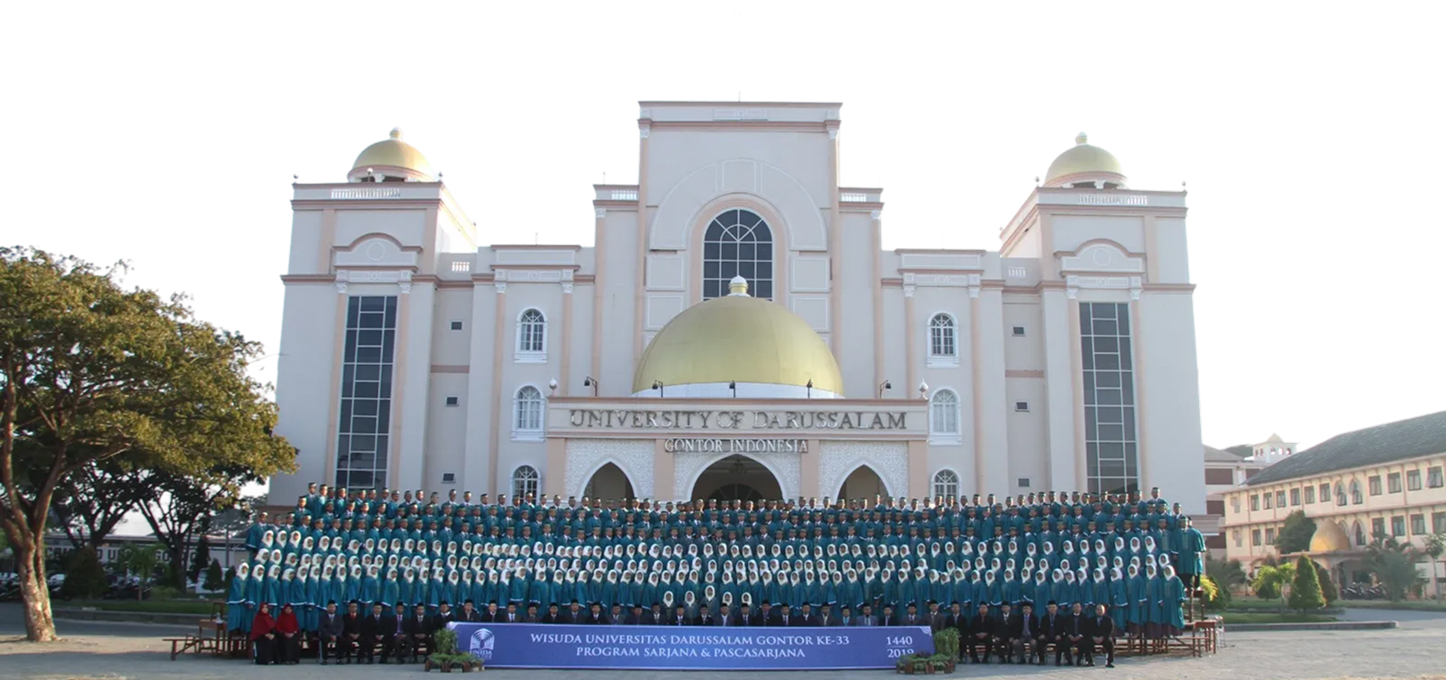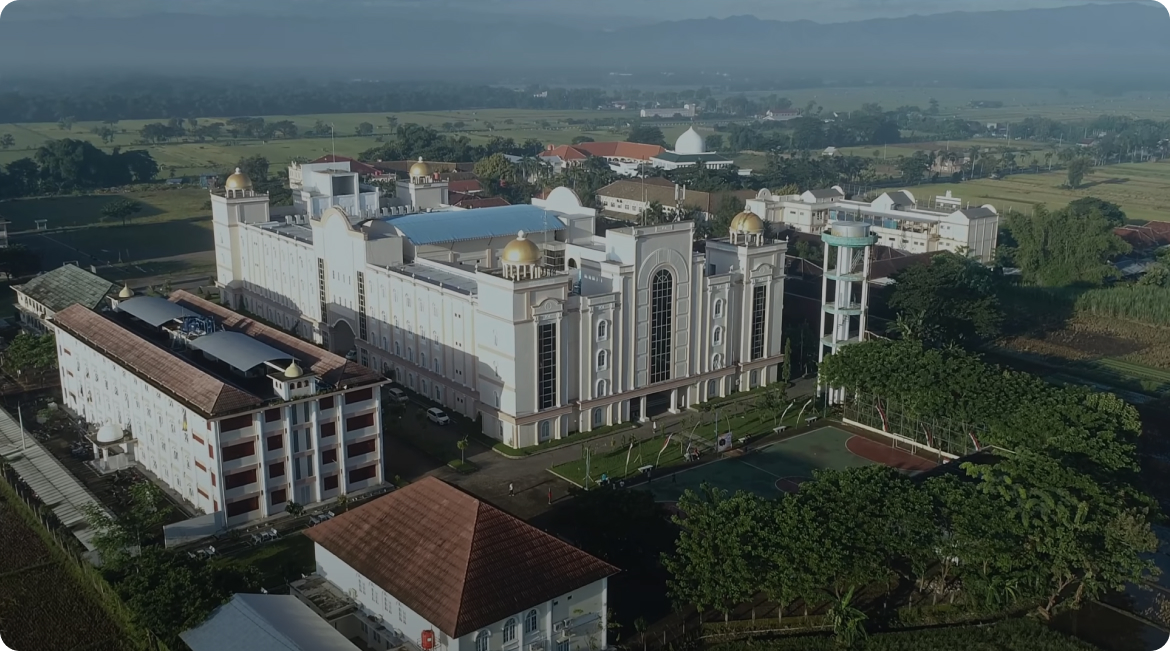

The Islamic Economics Study Program at the University of Darussalam (UNIDA) Gontor serves as a learning platform for students who aspire to develop competencies in Islamic economics, sharia finance, entrepreneurship, and the management of economic institutions grounded in Islamic and pesantren values. This program is committed to producing graduates who are excellent, Islamic in character, globally minded, and deeply rooted in pesantren traditions through the integration of Islamic economic knowledge with Islamic values within the higher education system of a pesantren-based university.
The spirit of academic development in the Islamic Economics Study Program at UNIDA Gontor is realized through the implementation of the Tri Dharma of Higher Education, which includes education and teaching, research, and community service. All academic activities are directed toward the development of Islamic economics with an orientation toward the Islamization of contemporary knowledge. Thus, the learning process emphasizes not only mastery of theory and practice in Islamic economics but also the cultivation of professional character that is Islamic, critical, innovative, and full of integrity.
Students of the Islamic Economics Study Program at UNIDA Gontor have the opportunity to develop competencies in Islamic economics, sharia finance, and entrepreneurship as the main focus of academic development. Throughout their studies, students engage in various courses such as Islamic micro and macroeconomics, Islamic banking, sharia financial management, and fiqh muamalah, while also participating in practical activities and case studies that support the mastery of professional skills in Islamic economics. This learning approach is designed to enable students to comprehensively understand the concepts of Islamic economics and apply them in real-world business practices and Islamic economic institutions.
In addition to academic coursework, students of the Islamic Economics Study Program at UNIDA Gontor have opportunities to develop their potential through various academic and non-academic activities, such as involvement in faculty research in Islamic economics, community service programs, student organizations, and various sharia-based business and entrepreneurship projects. The pesantren-based academic environment also shapes students’ character, fostering moral integrity, discipline, and strong leadership qualities.
As part of a university with a global vision, the Islamic Economics Study Program at UNIDA Gontor encourages students to develop an international outlook through various academic programs, research collaborations, and participation in seminars, sharia economics and business competitions, as well as scientific activities at both national and international levels. This aligns with the program’s vision to produce graduates who are capable of contributing to the development of the global economy while upholding Islamic and pesantren values.
The Islamic Economics Study Program at UNIDA Gontor is also supported by various learning facilities that enhance students’ skills in Islamic economics and sharia-based business, such as Islamic economics and finance laboratories, sharia-based business incubators, as well as access to a wide range of literature resources and digital learning platforms for research and business development.
Through various academic programs, the strengthening of Islamic values, and the development of professional competencies, the Islamic Economics Study Program at UNIDA Gontor aims to produce graduates with the profile of a Scientific Islamic Economics Professional—a professional practitioner in Islamic economics grounded in Islamic values in managing economic institutions and sharia-based businesses—as well as an Islamic Entrepreneur, a graduate capable of becoming a creative and innovative entrepreneur in businesses based on Islamic principles.
With an educational approach that integrates Islamic economics, Islamic values, and the spirit of pesantren, the Islamic Economics Study Program at UNIDA Gontor is committed to producing a generation of competent and integrity-driven Muslim professionals who are capable of making meaningful contributions to the development of the sharia economy and the advancement of the ummah.
Career Prospects
Graduates of the Islamic Economics Study Program at the University of Darussalam (UNIDA) Gontor have broad career opportunities across various sectors of economics and Islamic financial institutions. They can pursue careers in the Islamic finance industry as professionals in areas such as Islamic banking, sharia finance, zakat and waqf management, and Islamic microfinance institutions. In addition, graduates may serve as Islamic economic analysts, sharia financial consultants, or strategic planners in Islamic economics and business, contributing to key decision-making processes within organizations.
In the industrial and service sectors, graduates of the Islamic Economics Study Program at UNIDA Gontor have opportunities to pursue careers as Islamic entrepreneurs, business managers, and startup developers across various innovation-driven and value-based industries rooted in Islamic principles. Their competencies also enable them to work in financial institutions—particularly within the Islamic finance sector—as sharia financial analysts, business planners, and risk management practitioners guided by sharia principles.
Furthermore, graduates of the Islamic Economics Study Program at UNIDA Gontor can contribute to the public sector and non-profit organizations as program managers, administrators, and organizational development consultants focused on community empowerment and the development of the ummah’s economy. They also have opportunities to pursue academic careers as scholars and researchers contributing to the advancement of Islamic economics.
Equipped with knowledge of Islamic economics, professional skills, and strong Islamic and pesantren character, graduates of the Islamic Economics Study Program at UNIDA Gontor are expected to become leaders and practitioners in the field of sharia economics who are full of integrity, innovative, and capable of making meaningful contributions to the development of the Islamic economy and the welfare of society.
Admission Registration
New Student Admission (PMB) at Universitas Darussalam Gontor for the Undergraduate Program (Bachelor’s Degree) is conducted through three admission pathways: Regular Pathway, Non-Regular Pathway, and Special Pathway.
Complete information regarding the requirements and registration procedures for the admission selection system of UNIDA Gontor New Student Admission can be found on the website:
Estimated Study Cost
The estimated study cost for the Undergraduate Program (Bachelor’s Degree) can be viewed through:
Student Exchange
Students of the Communication Science Study Program gain broad global experience through Student Exchange and Outbound Mobility programs.
Scholarship Information
Complete information regarding scholarship requirements and application procedures at Universitas Darussalam Gontor can be found on the website.